
5 Guild House, 239 Bronkhorst Str,
Nieuw Muckleneuk
Nieuw Muckleneuk
Pretoria, South Africa
+27(0)12 341 4579
+27(0)86 036 0000


Copyright © 2016 NewUrban


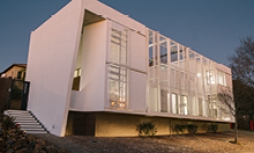
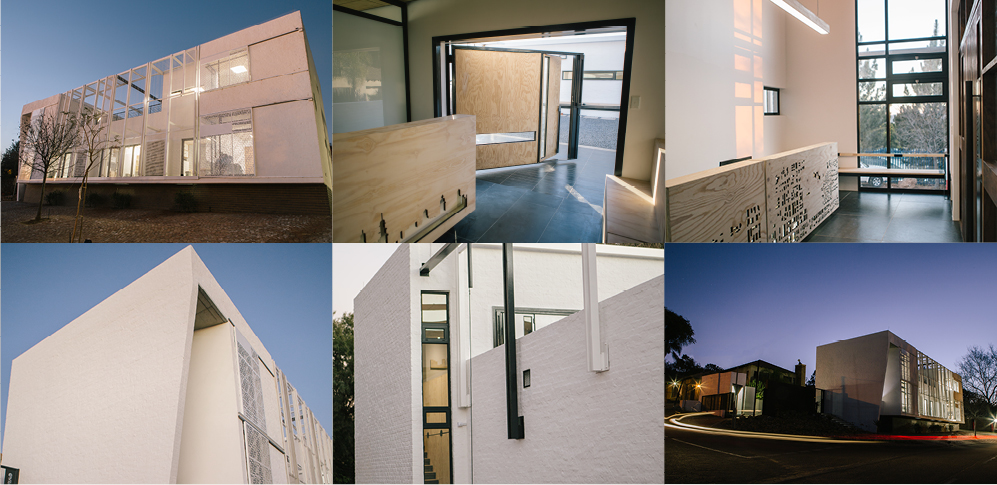
The narrow site for this medical pavilion (200m2) faces onto one such sea of parking to its immediate north (belonging to the Wilgers Hospital), with residential buildings along all remaining sides. The massing and placement on site were determined by the balance between an extremely tight budget, FAR and said parking regulations respectively, followed by the rest of the opposing forces described above.
The medical pavilion was positioned to edge tightly along the northern boundary of the site, with cars tucked away neatly behind. A double volume defines the entrance, dramatically framed with the corner articulation that responds to its ambition of becoming a small landmark. The pavilion takes cues from the architectural history of Pretoria. Envisioned as a stoep with a pergola to its north, the consulting rooms are placed at the centre of a constrained envelope. The exterior is bagged and painted white (another nod at local traditions), with a smooth interior finish. Local materials were used as far as possible, with furniture pieces hailing the city figure-ground, whilst responding to the notions of ethics of medical practice rather than simply aesthetics. As such, an environment that embodies an embracing, warm and therapeutic sensibility underpinned all decisions in the choice of careful detailing. An urban roof garden, again hailing the distant urban history, creates a small sanctuary. A carefully considered screen that will ultimately become a green screen softens the proximity to road and parking lot onto which the building faces, whilst binding the northern façade. It also mitigates the climate of the interior of the building, along with sliding screens that were again the result of a meticulous design process.

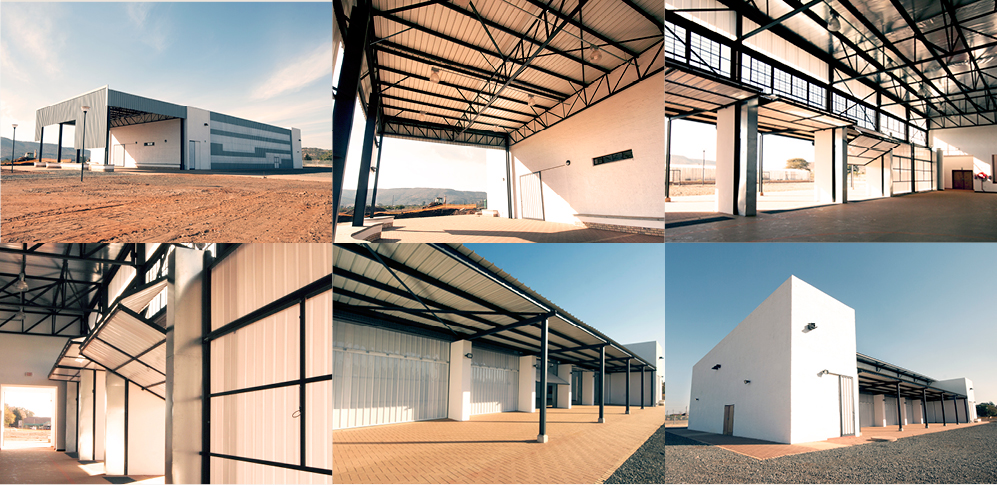
The main purpose of the community hall is to be able to house various community related functions as part of a multi-purpose centre to serve as urban foci for the township. Whilst considering the budget, the hall had to be designed in such a way that it would be robust to accommodate community gatherings, meetings, performances, weddings, funerals and either standing or seated functions. As a flexible design consideration, being able to accommodate indoor sports is a secondary functional requirement. The concept for the community hall is simple: two service boxes hold the multi-purpose area which is articulated in light-weight material as opposed to the “heavy” utility boxes. Colourful polycarbonate sheeting will enliven the lighter multi-purpose area, which also opens to the sides to extend inside-outside space. The building addresses the urban square immediately to its west with an extended roof which also acts as defined threshold to the building. The overhang also denotes hierarchy to the building. The square holds all the functional requirements together in a carpet of textured landscaping to contribute to a meaningful sense of place. Amongst others, mosaic patterns will be created by the local community with a small chess playing area which will contribute to creating a vibrant environment.
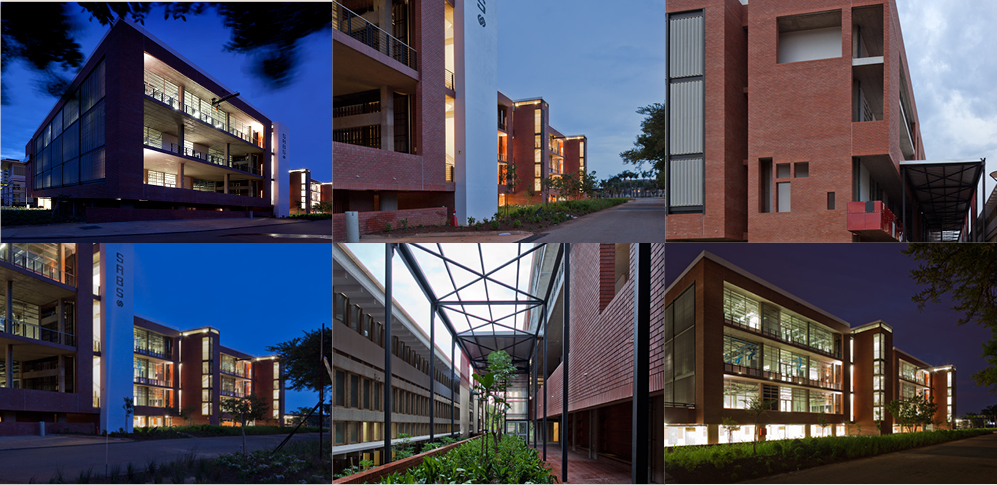
The position of the new laboratory building is along the southern edge of the site, along George Storrar Drive. The building has been divided into an estimated 8000m² for laboratories (over three floors) and an additional 1700m² for possible Conference facilities. The space between the existing buildings and the new would become a landscaped pedestrian “street”. Essentially, three simple boxes form courtyards in between another. From the street, the boxes allow momentary glimpses into the otherwise inaccessible laboratory spaces. Seemingly a box within another box, each has a double skin that offers opportunities to accommodate services.
The structural grid of the existing buildings provided cues for the structural modular of the new building, while other formal cues were taken from the modernist neighbour. Extensive research was done on the latest architectural devices for laboratories, both nationally and internationally. Amongst others, this determined the provision of peristitial space for services, while also informing the flexible 3m-modular to allow for flexibility over time.
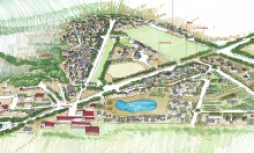
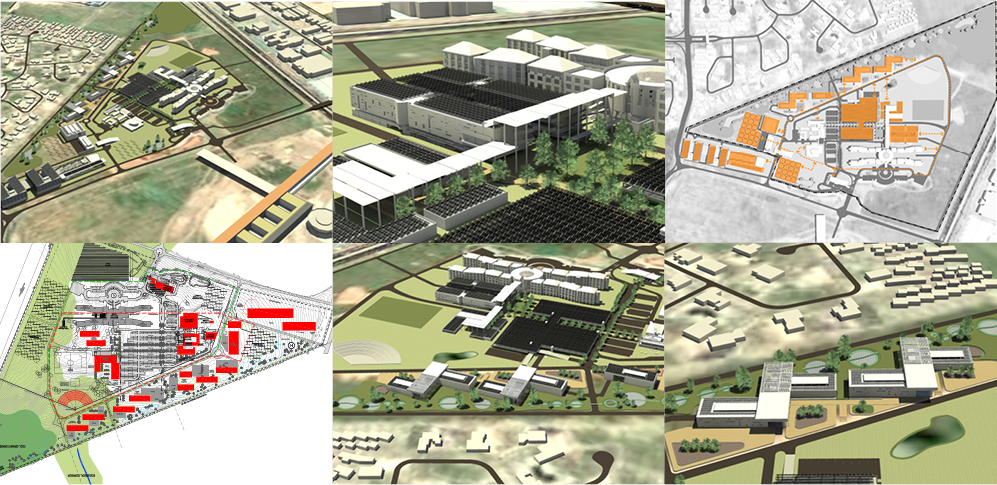
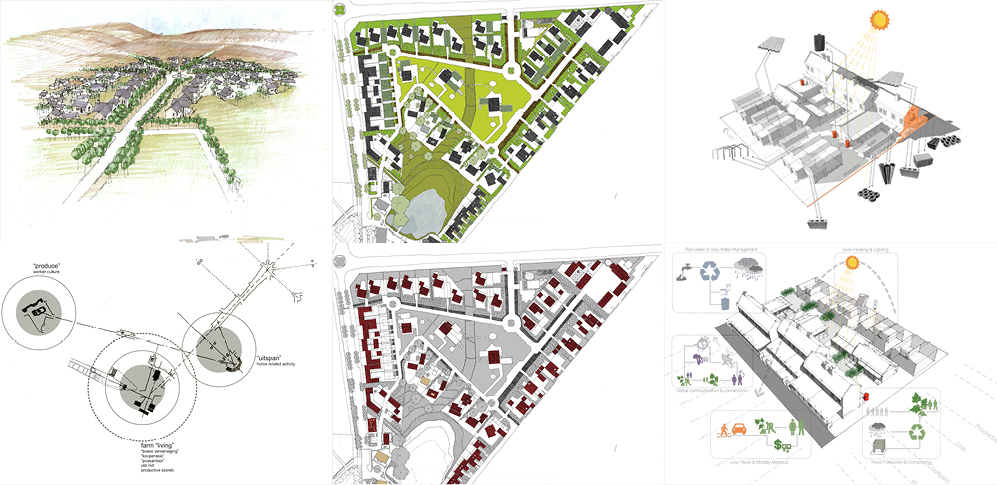
Verkykerskop is located along the Free State Provincial tourist corridor (M3). Characterised by scenic natural topography with ancient rock formations, ancestral rock paintings and prominent farming history, the area is also nestled between commercial and small-scale subsistence farming. The proposed new development is carefully inserted between farmland, existing buildings with dormant infrastructure, livestock and horse holding areas, gravesites, lookout points and watersheds. The “uitspanning” - a local word meaning space to relax and unwind after long migration with livestock - is proposed as the main node and public space, at the centre of the 43-ha site. The noble program of 300 mixed income residences, most with own intensive home farm opportunities is matched by a broad complement of civic uses. Adaptive reuse of existing buildings and structures allow the area to re-emerge and participate in the regional economy. The balance between built and open spaces at Verkykerskop does more than facilitate pleasant communal living. It integrates human development with sustainable agriculture, energy farms and environmental management. The plan allows the built structures and fabric between open spaces to nestle in the natural and cultural landscape. The master plan sets in motion the essential creation of public opportunities to live, work, farm, learn and play in direct response to the natural queues of location - land, local vegetation and prominent views.
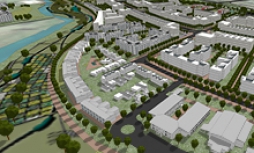
The Rainbow Junction Development is situated in the centre of the new zone of choice of the City of Tshwane, 6km to the north of Church Square. It is strategically positioned at the northern gateway to the Pretoria CBD, with proximity to and within easy reach of the CBD and Wonderboom Airport. Bordered to the east by the Apies River, which runs the full 4 km length of this development node.
This development will be one of the major northern gateways to Tshwane. Vistas towards the Apies will be ensured by means of the landscape and urban design guidelines. Apart from vehicular movement, the streets will be designed as special streets with integrated landscaping and urban design qualities. This is especially the case with street intersections.
The placement of iconic buildings on strategic sites within the development will be prescribed by the Urban Design Guidelines. This will not only provide landmarks for orientation within the development, but also act as the visual manifestation of the start of a new urban core for the whole area. It is proposed that these iconic buildings have a distinct African character to enhance the unique identity of this development.
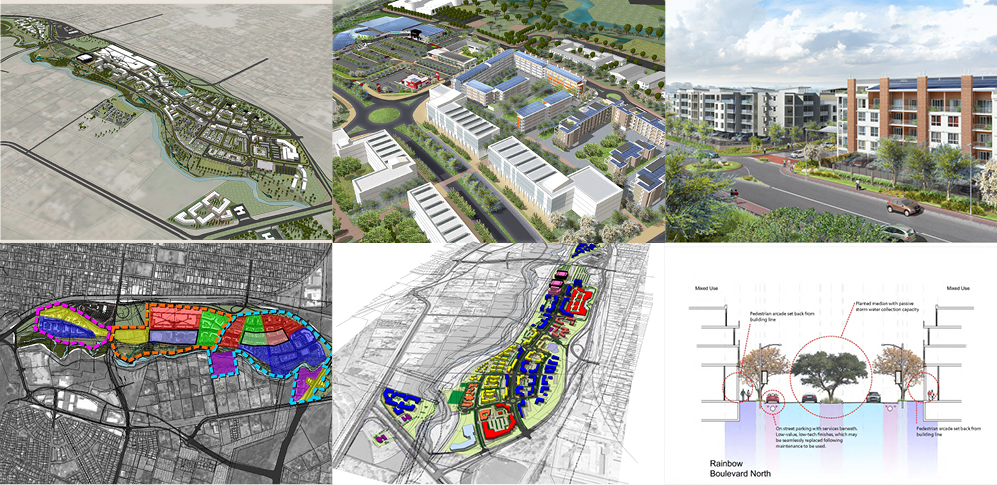
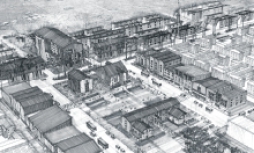
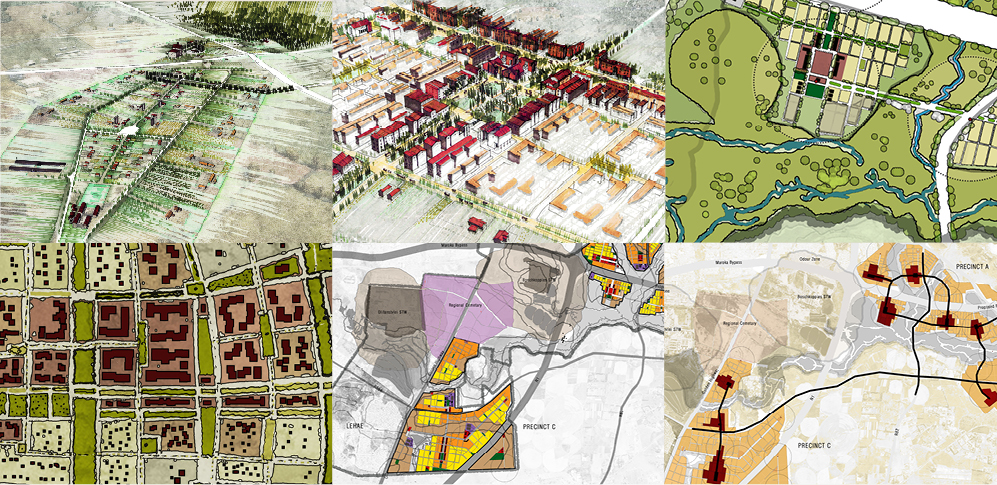
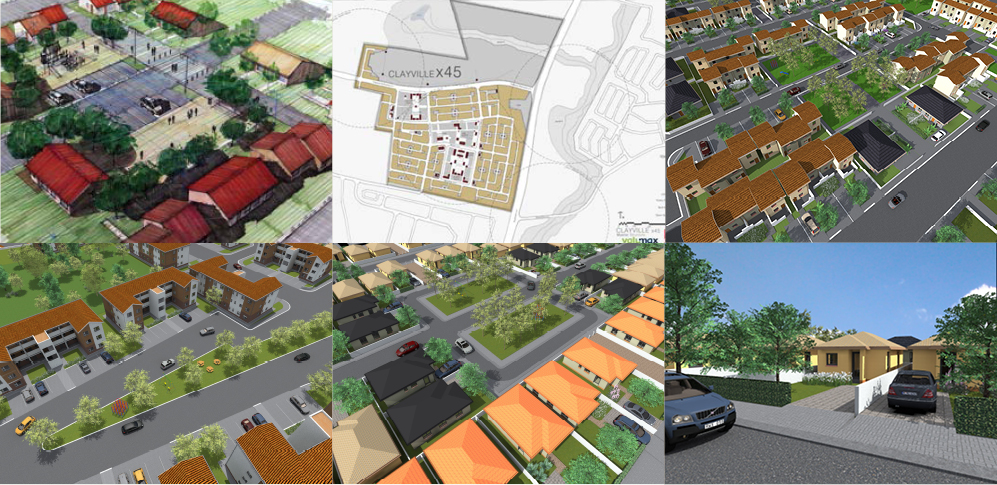
Southern Farms is a large-scale, mixed-use development proposal envisioned by a development company working in Gauteng, South Africa. The site allocated for the project includes large developable areas, protected wetlands and streams, existing farm land and a challenging topography.
The goal was to create an Urban Design Vision which would satisfy both the needs of future inhabitants and the developers while protecting and furthermore integrating the management of sensitive natural areas. The site is located on a piece of land that holds the potential to integrate the previously segregated Soweto into the rest of the Johannesburg metropolis, thus adding a politically driven layer to the decision-making process.
Posed with these constrains - protected natural areas, large vehicular routes posing disconnection of villages and a low budget, the key design concepts focus on finding solutions in a practical manner whilst creating places for people at the same time. After forming a strong concept to satisfy these initial needs, the biggest challenge was to devise a layout that could incorporate high densities of housing and a large number of dwellings. This was addressed with a responsive and sensible spatial structure while utilizing economic and linear geometries and the incorporation of adequate and accessible civic landmarks.
A land use cycle has been devised with input from all professionals, which aims at including undeveloped land in phases to support developing land. These will include agriculture, solar farms and natural area protection. The project is currently in the initial phases of development, with several years of site work envisioned before completion.
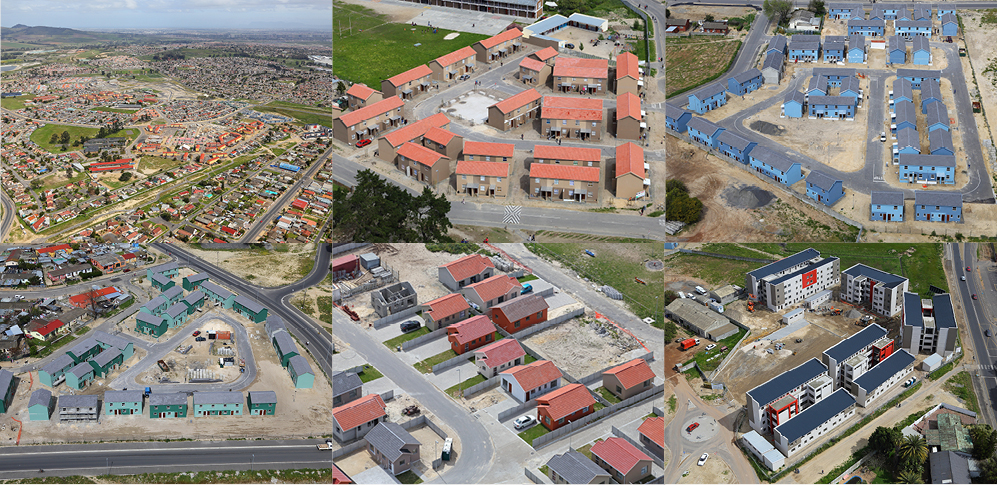
Building for Change
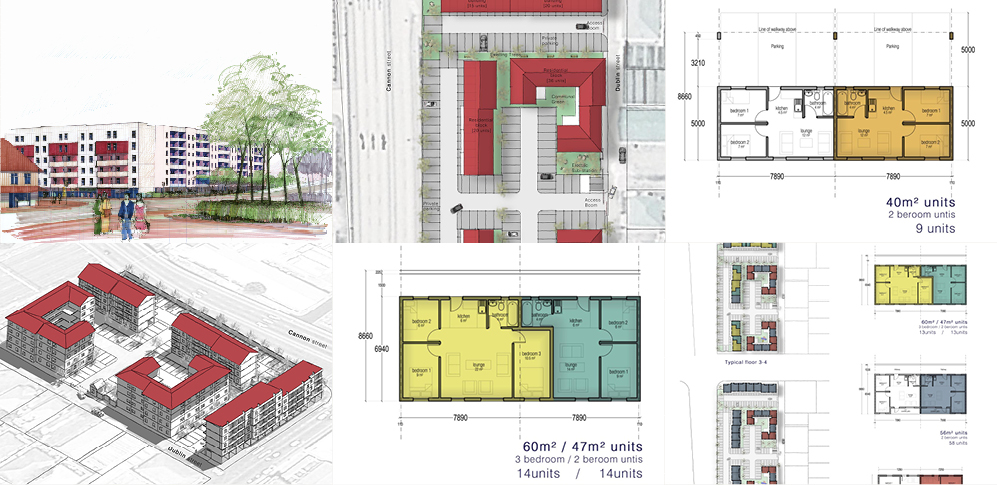
Urban change. Urban and social sustainability are of great concern because they have been virtually ignored in current programmes and designs to re-imagine housing for the City of Cape Town. For urban development and housing could become the catalysts for an end to poverty, exploitation, segregation, inadequate housing, congestions, ugliness and homelessness within the city.
Resilience/ Resilient place making and buildings insure flexible urban spaces over time and is at the core of the housing infill concept. Spaces could transform in terms of accommodating a mix of uses. Time in enabling buildings and places to be adapted, personalise and changed in use over time according to the needs of occupants. All of the above elements are important for long-term sustainable urban environments and housing.
Smart living/ The biggest challenge is to take an ideal, like sustainable development, and make it into daily reality for all occupants of new houses and urban environments. Practical steps to help save money, improve safety at home, fight poverty, fight climate change, improve air quality and to protect the environment are in the hands of smart communities like Scottsdene.
Urban design principles/ Urban design adds social and environmental value by creating well connected, inclusive and accessible new places. Key principles include urban place making, street definition and articulation, visual access and choice, productive green public spaces, public participation and choice, quality of mixed income housing.
contemporary intervention, linking two historical buildings of different architectural languages. Situated along the Muizenberg scenic mile, the Police Museum is a significant part of the local community and considered by many to be one of the historical highlights of the conservation area. After many years of neglect, the two buildings housing the Police Museum have fallen into a state of disrepair and the project team was appointed to restore and refurbish the buildings, making them compliant with current building regulations and to make the facility universally accessible in line with Government Policy.
The first building, built in 1910, was the one and only Carnegie Library in Cape Town (one of eight remaining country wide). The second building on the north side of the library, built in 1912, was a post office, the first to receive airmail in South Africa. When the police moved into their new premises during the early 1990’s the two buildings were converted into the Police Museum.
Heritage indicators for the project called for the later architectural clutter to be removed, and the need for sensitive contemporary interventions which were to be implemented with an understanding of the proportions, scale, spatial and architectural character of the two buildings. Furthermore, the aesthetic character of the existing and surrounding historical buildings could not be diluted.
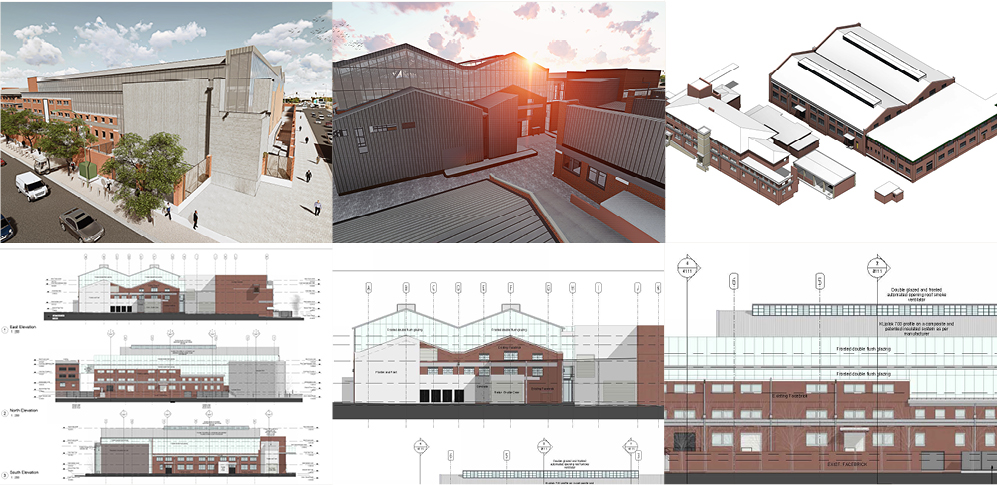
Covering a small portion of the historic campus of the former Government Garage site, the new intervention takes up the corner of two prominent streets, Kgosi Mampuru and Visagie Streets in the Pretoria inner city. Kgosi Mampuru Street, previously Bosman Street, was cleared of vegetation along this strip as a security measure during the apartheid regime, rendering a hard western urban edge. Most of the industrial buildings on the site were built between 1923 to 1945, heralding ubiquitous Kirkness face bricks. The buildings affected by the intervention, currently mostly standing vacant, will be incorporated into the larger Government Printing Works which is already located and operating in proximity on the same site. An existing, much contested fence, runs along the street edge – a National Key Point requirement.
The language of the proposed additions grows out of the idea of inserting new facilities within the eroded shell of the former brick warehouse. In order to re-use the structures for the print works, a minimum head clearance had to be achieved, resulting in the literal raising of the existing roof. The new building slips past the old in a series of planar elements of glass, rheinzink and steel. These planes then become a language of the new beneath the single unifying roof profile.
The new addition will preserve significant historic materials as far as possible – compatible but differentiated from the historic building. To preserve the historic character, the new addition will be visually distinguishable from the historic building.
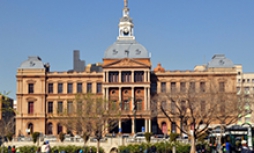
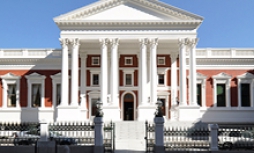
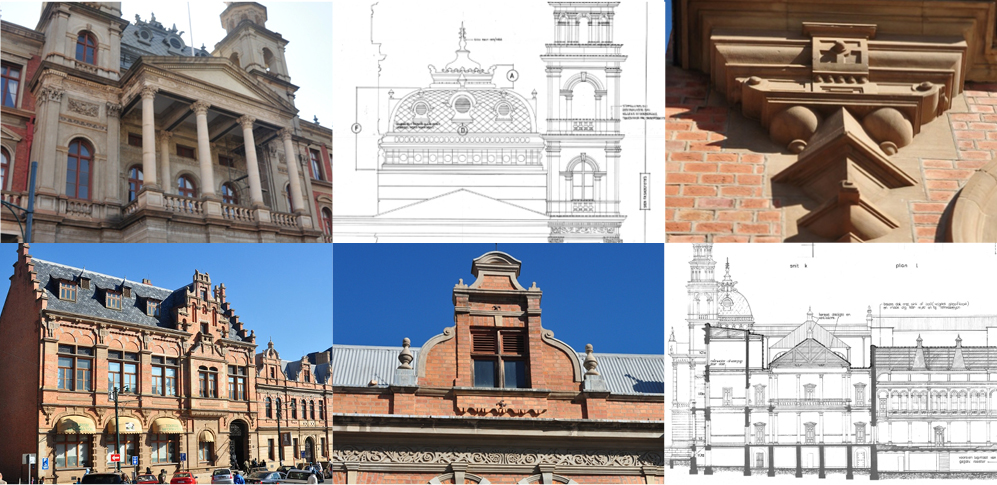
HolmJordaan was appointed to restore buildings along the western edge of Church Square over a period of 28 years.
Restoration work was done with expert knowledge and skills to conserve the heritage of the Church Square Precinct. The general approach to all restoration work undertaken was to research the original construction methods, materials and applications. Thereafter research was done on how contemporary materials and methods could be employed to match the existing structure without detracting from the authentic building’s appearance and performance.
Previous poor workmanship was repaired, and consequently extended the life of the buildings. Amongst others, the projects included scientific research on sandstone restoration as a common denominator. The chief principle was to retain as much of the original buildings, yet repair the damaged elements with good practice to match the existing as authentically as possible.
Meticulous attention was given to detail. Profiles were measured, and steel forms were made to remodel damaged elements such as facade details. Water penetration prevention was applied to all buildings with details as illustrated in the drawings and photographs.
The Church Square Precinct comprises of the following buildings:
AWARDS:
• Western Facade: Old Pretoria Society certificate of Merit (1990)
Institute of South African Architects Conservation Award (1990)
• ”Ou Raadsaal”: Institute of South African Architects Conservation Award (1991)

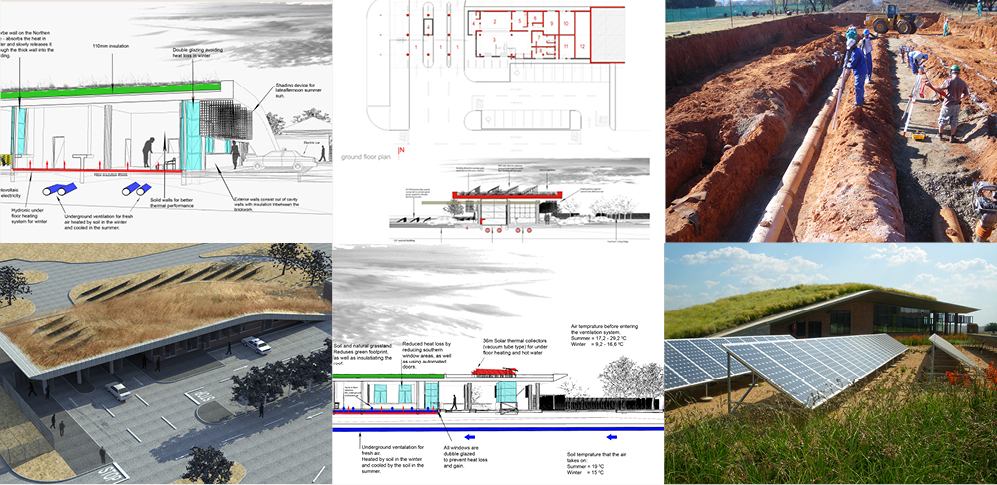
Instead of filling more urban space when building, the new Welcome Centre at the Development Bank of Southern Africa (DBSA) in Midrand, decided to keep energy efficiency, architecture and landscape in the forefront of their minds. Architects Holm Jordaan Group built the new Welcome Centre to look like a continuation of the landscape, disguising itself as Highveld savannah with its functions neatly tucked underneath and merging wall and roof into a single entity. The green design provided the building with a well insulated roof that replaced some of the Highveld vegetation. Indigenous plants and landscaping were introduced and full site rehabilitation was done after construction
Trombe walls were introduced in the northern walls to create the correct solar heat gain in winter.
All storm-water for landscaping is treated in situ with a retention dam collecting storm water, while also supporting existing bird and wildlife. Retention of storm water on site also reduces the demand on the City Council storm water system. Another noteworthy distinction of the building is that it is completely off-grid and CO2 neutral.
Earth excavation offers temperature control system opportunity
Collapsing soil conditions on site necessitated the earth to be excavated to a depth of approximately 3m and replaced with suitable material. This deep excavation offered a cost-effective opportunity to use the earth’s constant temperature as a control system: Fresh air supply is drawn into the building via underground pipes, thereby pre-heating the air in winter and pre-cooling it in summer.
Natural light permeates the small building, while artificial high-efficiency lights further reduce energy demand and heat gain. A solar water heater provides warm water for under floor warmth in winter and all year domestic hot water.
According to the energy specialist of the Welcome Centre, Henning Holm from Omnibus Engineering, energy use will be a fraction of that of a conventional building of the same size. Their vital statistics for the Welcome Centre include the following:
Energy efficiency at the Welcoming Centre
Solar hot water plant:
Solar photovoltaic plant:
Energy efficiency:
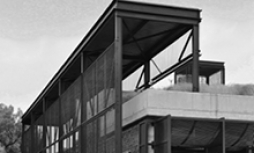
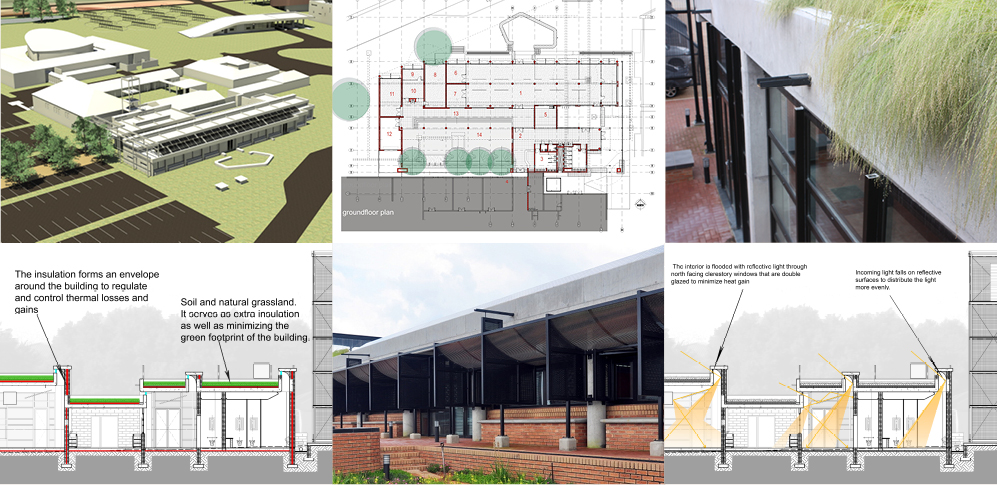
The brief called for a new extension to the VULINDLELA Academy that would accommodate breakaway rooms, training rooms and offices. In essence a very simple rectangular pavilion, the new addition responds to both the scale and layout of the existing training facility. The form steps to accommodate the angular site. Functions are lined along the edges of the open courtyard, accessed from an outside covered area.
While the flat, planted concrete roof has thermal advantages, it steps to allow light to filter into spaces. Rain water is harvested for internal use.
A structural grid of 5 x 5m is used for the new building. This allows for an ideal building width to accommodate environmental control, structure efficiency and space flexibility. The layout, insulation, window size and orientation, shape and proportions have all been optimized in order to use least possible external energy for thermal comfort. Reduction of need for air-conditioning is afforded by passive design and fresh pre-cooled/heated air supply, reduced load through energy efficient equipment, under floor heating through a solar heater and lastly solar cooling with an air ventilation system.
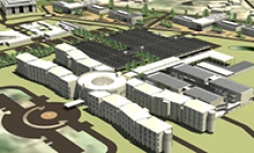
Holm Jordaan and Omnibus Engineering compiled an Energy Master Plan for the DBSA campus. Aligned with both international thinking and local circumstances, the DBSA manages its energy usage with the comprehensive Energy Master Plan. The DBSA notes that the reason for this energy master plan is three-fold: to ensure energy security, to reduce energy cost and to promote responsible development. According to the DBSA, imminent developments along neighbouring sites (such as the forthcoming Pan-African parliament) will continue to pressurize the near-by sub-station, further prompting the architect’s green thinking and to include the maximum energy saving options available.
It is furthermore important for the Bank to demonstrate best practice in terms of energy efficiency and generation; as well as small environmental footprint. There are the following steps towards effective energy consumption and a reduced environmental footprint. These include: